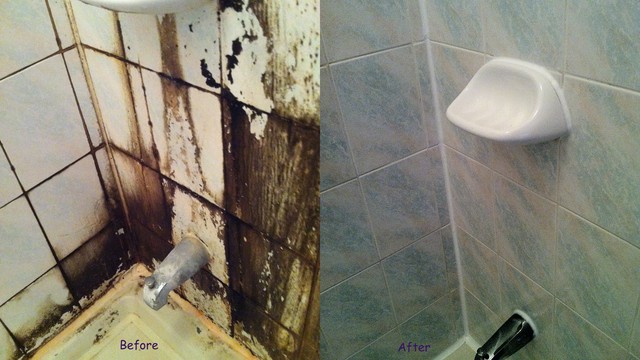
Black mould on shower walls is a common household problem. It can be unsightly and may also affect indoor conditions, so it is important to understand why it develops and how to address it safely.
Why mould grows in showers
Bathrooms provide the warm, damp conditions in which mould thrives. Showers are especially vulnerable because water can remain on tile, grout, caulking, and other surfaces after use. Poor ventilation, leaks, and moisture trapped behind damaged grout or caulking can make the problem worse.
Dark growth in a shower is sometimes described as “black mould.” One mould associated with that term is Stachybotrys chartarum, although colour alone cannot identify a mould species. Regardless of type, visible growth and the moisture source should be addressed.
Possible health concerns
Mould exposure can irritate the eyes, skin, nose, throat, and lungs. Some people—especially those with allergies, asthma, or other respiratory conditions—may be more sensitive. If an area is extensive, keeps returning, follows major water damage, or is associated with health symptoms, consult an appropriate mould-remediation or health professional.
Prevention
- Use an exhaust fan during a shower and for a period afterward.
- Open a window when practical and keep air moving through the room.
- Wipe excess water from shower walls, doors, grout, and caulking.
- Repair leaks and replace failed grout or caulking promptly.
- Clean the shower regularly so soap residue and organic material do not accumulate.
Cleaning a small surface area
- Ventilate the bathroom. Run the exhaust fan and open a window or door when possible.
- Wear appropriate protection. Follow the cleaner manufacturer's label, including its guidance for gloves and eye protection.
- Choose a product intended for the surface. Test it in an inconspicuous area first, especially on natural stone or coloured grout.
- Apply the cleaning solution. Use a sponge or brush and follow the product directions for contact time.
- Rinse and dry. Remove residue thoroughly and dry the surface.
When restoration may help
Recurring discolouration can indicate worn grout, cracked joints, or failed caulking. Professional cleaning, regrouting, and resealing can remove deteriorated material and restore the shower's finished surfaces once any underlying water problem has been resolved.